
“A arte sempre foi isto – interrogação pura, questão retórica sem a retórica – embora se diga que aparece pela realidade social.”
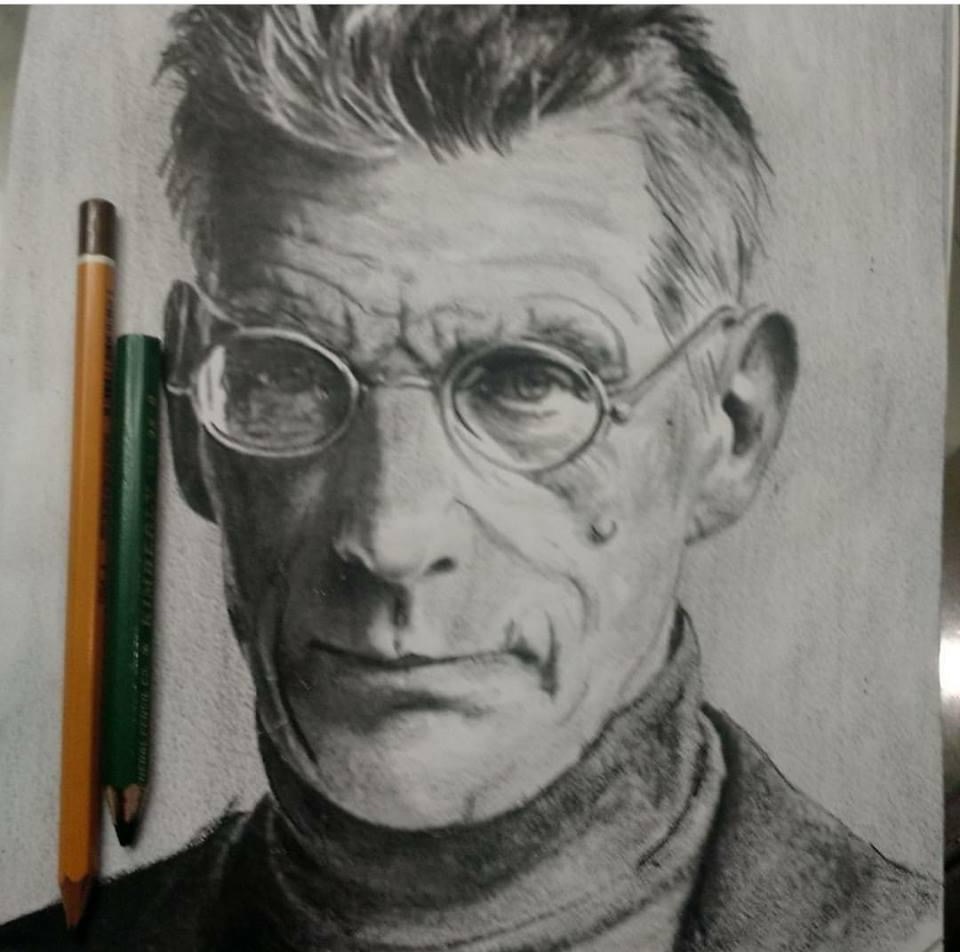
Art, in its purest form, has always been an open-ended question, a rhetorical query stripped of its rhetorical clothing. It exists not merely as a reflection of social reality, but as a canvas for the deepest musings of the human soul. Like the works of Beckett, it delves into the existential, the profound, the spaces where certainty wavers and ambiguity reigns.
In the realm of art, there are no clear answers, no tidy conclusions. Each piece is a mirror, reflecting the complex and often contradictory nature of our existence. It challenges us to think, to question, to feel the weight of the unknown. Art is the silent scream, the whispered secret, the paradox that makes us confront our own humanity.
Through the lens of social reality, art gains context and depth. It becomes a dialogue, an exchange between the creator and the observer, each bringing their own perspectives and experiences to the table. Yet, at its core, art remains an interrogation, a space where questions are more valuable than answers.
Beckett’s legacy reminds us to embrace this uncertainty, to find beauty in the unresolved. His works, like all great art, compel us to look beyond the surface, to delve into the shadows and explore the nuances of existence. In doing so, we find a profound connection to ourselves and to the world around us.
Art, then, is not just a reflection, but a catalyst for introspection and growth. It is the purest form of inquiry, a testament to the boundless curiosity and complexity of the human spirit. Through its interwoven questions and silent answers, it beckons us to engage, to ponder, and to ultimately find meaning in the chaos. ❤️
©️ Beatriz Esmer
 Beatriz Esmer