
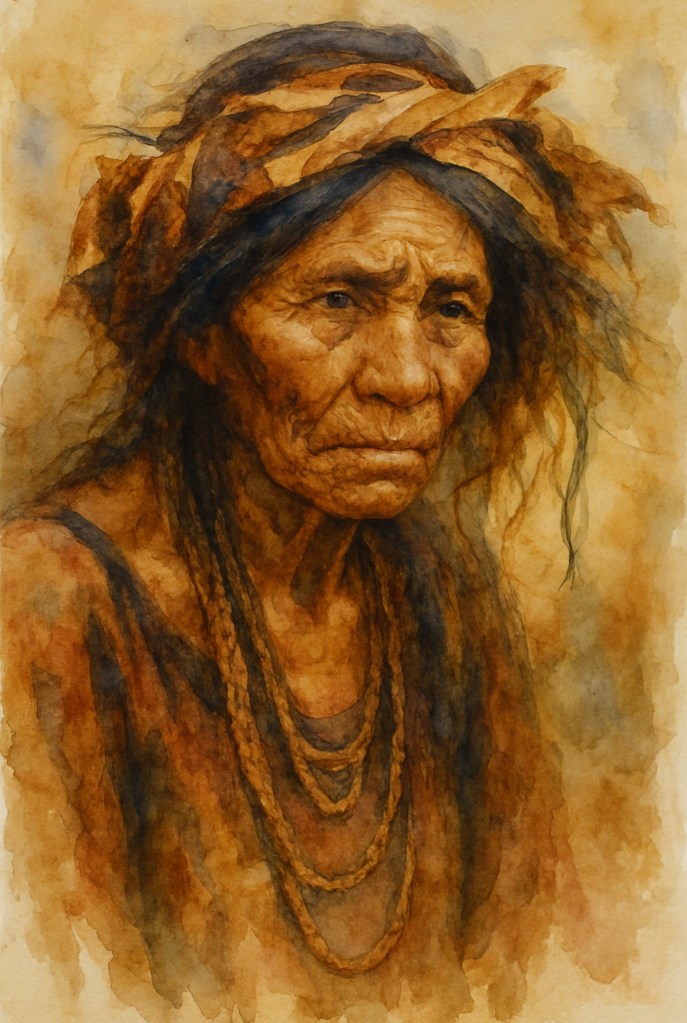
Maria, like many invisible women of Brazil, lived far from the world of boots and closer to the soil, the animals, and the quiet injustices of family life. She prayed not out of faith but desperation, inheriting her mother’s rituals while resisting her mother’s doctrine of feminine sacrifice. Maria rejected the notion that suffering was virtuous or that women must carry the cross in silence. She did not seek sainthood or admiration—only the freedom to invent herself. She was one among many: unveiled, unsmiling, full of grace without sanctity. In a home where love was unevenly distributed, she found companionship in animals and observed the world with a sharp, unsentimental eye. She admired the chickens for their chaos, the pig for its unapologetic mess, and the horse for its masculine elegance—reminders of the men who conquered with mere presence.
Maria’s refuge was language. She wrote to soothe her pain and transform it into hope, believing that anguish carried sacred signs. Words—soft and hard—became her tools to empty the soul and create beauty. While others consumed, she felt deeply, immersing herself in memory, fantasy, and the ghosts of her past. She saw transcendence in the mundane: pots simmering with sorrow, seasoning infused with forgiveness. Cooking, for her, was a sacred act—an alchemy of emotion and meaning. Through this, she stitched together stories that burned like embers, illuminating pieces of the sky.
Her journey was not toward martyrdom but truth. In finding the right language to affirm herself, Maria experienced moments of epiphany—effervescent joy that lifted her beyond the ordinary. She was not a heroine, but a woman who dared to feel, to resist, and to create. In her unveiled grace, she embodied the quiet strength of countless Brazilian women whose stories remain untold, yet whose presence shapes the soul of the land.
©️ Beatriz Esmer
 Beatriz Esmer